Beyond Indicators: How independent evaluation improves Citizens’ Assemblies
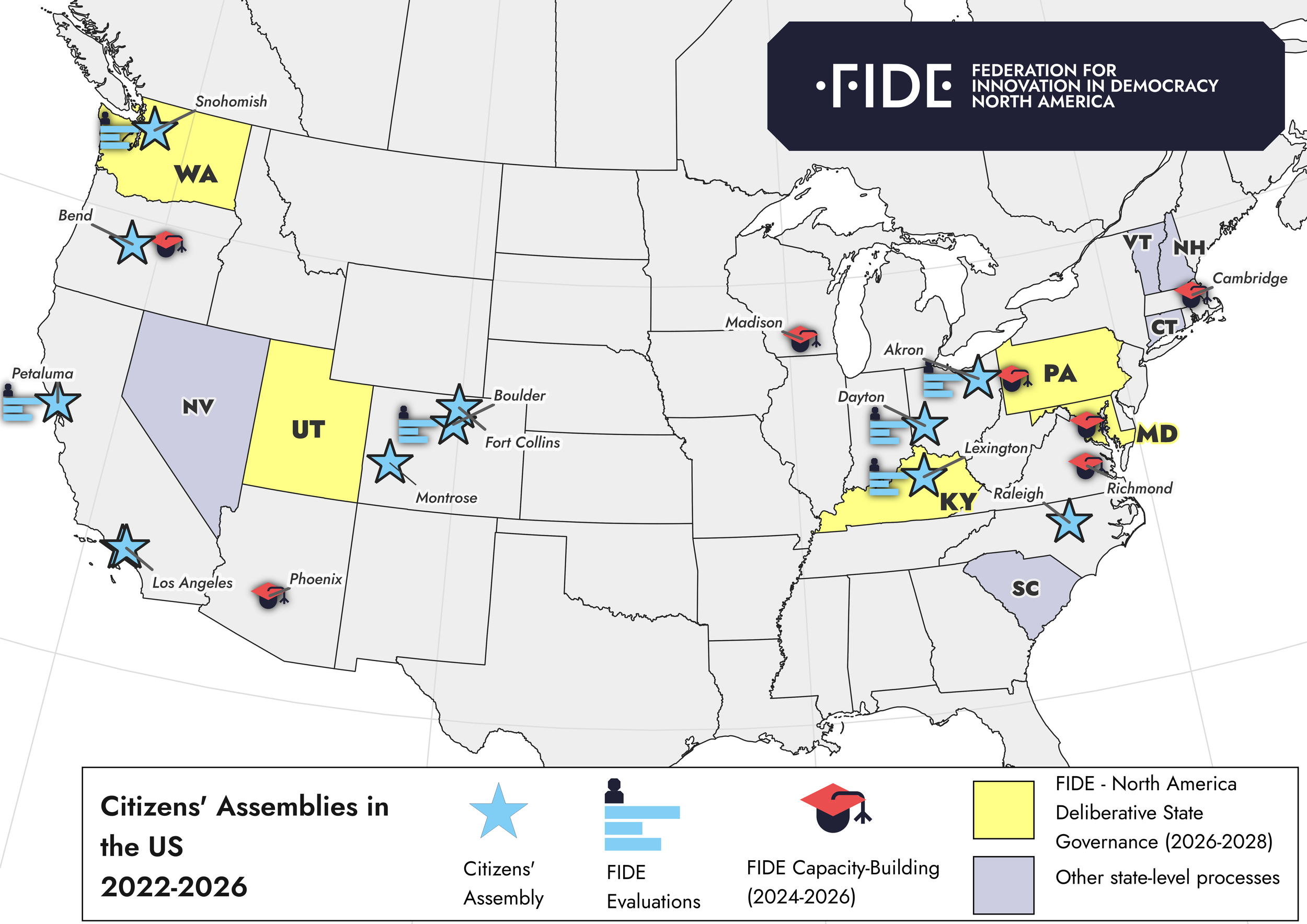
Understanding the impact of Citizens' Assemblies requires more than anecdotal evidence - it requires rigorous evaluation. This has been a core part of our vision since our founding. In 2024, we launched the Learning Series, an independent framework for evaluating Citizens' Assemblies across North America. Since then, we have produced comprehensive case studies for the Yukon Citizens’ Assembly on Electoral Reform, the Victoria Saanich Citizens’ Assembly On Amalgamation, and the Boulder Valley Community Assembly. Three more case studies - focused on Assemblies in Lexington (KY), Snohomish County (WA), and Akron (OH) - are currently underway.
Our iterative methodology and the accompanying case studies demonstrate the value and effectiveness of each Assembly process. Together, they provide a roadmap for implementers, researchers, elected officials, and donors by illustrating our Theory of Change, documenting impacts, and identifying opportunities to strengthen future Assemblies.
While the reports are readily available to the public online, we thought it might be of interest to peak behind the curtain of our evaluation process, and better understand the data being presented. To dive deeper into the workings of our Learning Series, we interviewed Learning Series Research Coordinator, Pim Trommelen, and Monitoring and Evaluation Fellow, Lindsay McMahon.
This interview has been lightly edited for brevity and clarity.
Chloe Borenstein-Lawee: Thank you both for joining me today. Let’s start with how you both came to FIDE?
Pim Trommelen: I came to FIDE in late 2024 as a PhD candidate at Ohio State University. I heard of FIDE through the Institute for Democratic Engagement and Accountability [IDEA], and wanted to put some of the more abstract principles I learned there regarding citizen participation and deliberative democracy into practice.
Lindsay McMahon: I joined in March 2026. Before, I was working internationally with governments and communities to strengthen democratic reform and public participation in policymaking. That’s how I met [Executive Director] Marjan Ehsassi and learned about FIDE.
CBL: Tell me about your role at FIDE.
PT: The purpose of the Learning Series is to examine the ways in which Citizens’ Assemblies work, and what parts of the process might need improvement. It’s important to test and research Assemblies over time, looking at different units of analysis and locations to get some comparative data and use that to improve the way these processes work. My role, specifically, is to work with our team of evaluators working on individual case studies - they’re really our star players in the Learning Series. I give them guidance, structure, and ideas that will help them write as strong a report as possible.
LM: My role is examining our evaluation system and tools, strengthening and standardizing them, so that each case study we produce follows the same structure and processes of measurement and analysis. The idea is to lend consistency to the way FIDE evaluates the effects and effectiveness of the Citizens' Assemblies that we support.
CBL: I’ll ask the blunt question - why do we need a standardized system of evaluation? Why do these case studies matter?
PT: Citizens' Assemblies in the US are quite unfamiliar. Until a couple of years ago, they just didn't happen. All of a sudden, they're springing up all over the place. Independent evaluations help local communities and implementers thinking about organizing Citizens' Assemblies, and also academics considering how to move forward with them. There has not really been a systematic attempt to capture what makes them work over a prolonged period of time in different contexts. That’s what we’re doing. By the end of the summer, we'll have six done. And then by early next year, we should have seven. We are working on a comparison of our completed case studies, reviewing all the data in a report about lessons learned in the last two years. I think that will be a great opportunity for the field, with collective long-term insights and ideas about how to move forward.
CBL: And how do these evaluations come together?
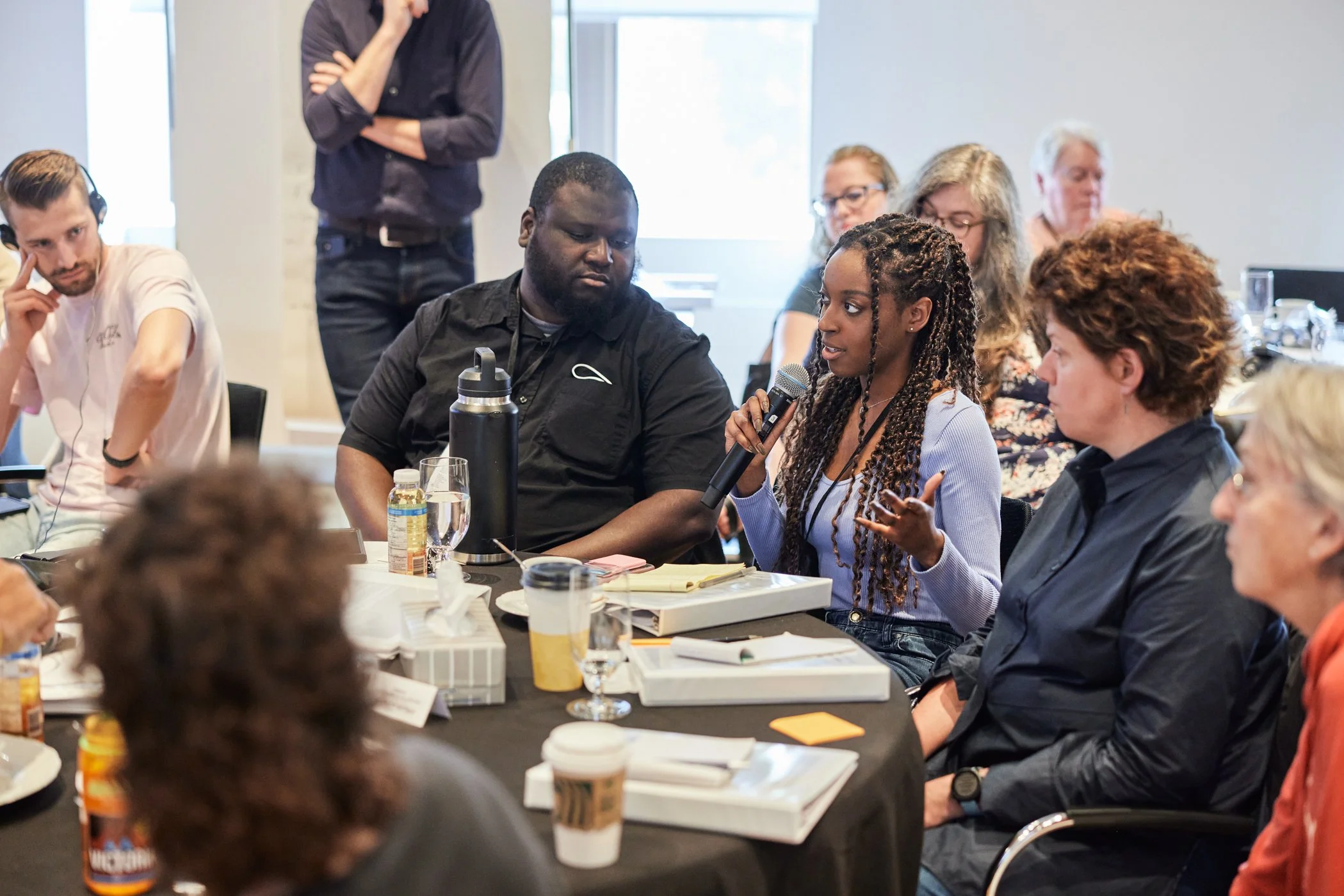
PT: At first, we would hear about Assemblies happening and approached implementers to see if there was interest in an evaluation. Now, we also get approached by implementers who are familiar with our work. From there, we recruit a lead evaluator - generally we look for PhD students and early-stage professors at a local university who can easily attend the Assembly and are a part of the community, but are a level removed from the process and implementation to allow for objectivity. Once the lead evaluator is chosen, we prepare them for the work, review expectations and standards for the survey and communication process with implementers and participants of the Assembly. Each Assembly is unique, the way that implementers want outside observers to interact with people differs. In general, we try to be relatively removed from the Assembly members. We don't want to intrude or influence them in any sort of way. We observe, review any materials provided to participants, and then there’s the survey.
LM: Most of the data that we are relying on for our evaluation are quantitative data coming from the baseline and endline surveys of the Assembly members. The survey is where we get a lot of the comparative data by which to determine things like, “did members express that their knowledge increased,” or, “did their tolerance for others' views increase,” things like that.
PT: That's right. There are also interviews that allow us to go more in depth and to get some more information and experiences that the surveys don't capture.
LM: Yes, the survey data are quantitative data, the observations and interviews conducted by our lead evaluators provide qualitative data, and all of that goes into a final synthesized case study report.
CBL: I understand the comparative report will be coming out in a few months, but are there any trends you are already noticing across case studies that you can speak to?
PT: What I will say is we're seeing that people really like these processes. Almost everybody who participates in these Assemblies says that they would want to do it again, they would want their friends to participate, and that the policy proposals that come out of them feel representative of their community. By and large, all of them are very big fans of this.
CBL: Lindsay, I understand you’ve been developing an Indicator Matrix to help measure the quantitative data that comes out of these surveys, can you explain more about it?
LM: Yes, the Indicator Matrix is essentially a table that lists and defines the measures of the immediate changes we expect to take place over the course of the Assembly itself - in people's attitudes, perspectives, view of what they learned and what they appreciate. And then we're also looking at the elements that go into the Assembly and their effectiveness. Did we have enough resources? Did we have enough information? Did the facilitators have enough training? Was time used according to the schedule? Those kinds of aspects. We're trying to look at all the different elements of implementation and what the effects on members were.
CBL: How many indicators are there?
LM: Between 40-50. It’s still at the testing phase. So, we have to see whether it's feasible to collect data and do the measurement of all of them by a single independent evaluator. It's really about making sure that we're asking all the right questions and tracing the connections from questions to responses to analysis and measurement.
PT: I think the indicator matrix is going to be really helpful for the field. All our evaluation reports are easily available to the public; they are read by everyone from academics to government officials. They have even been cited in international reports. And the Indicator Matrix is going to present our data in a professional, clear, easily understandable manner. I think this is going to be incredibly helpful for everybody that's interested in these independent evaluations, making it very clear what we're looking at, what we're analyzing, and how we are expressing success on any given topic.
CBL: Does any organization or group other than FIDE do independent evaluations like these?
PT: In North America, we are the only ones that do it in a comprehensive manner.
LM: You can't have implementers also objectively evaluating. It is important that there be organizational separation between implementers and evaluators, and that's probably part of why it just makes it more difficult to take on as a kind of a specialized expertise. There's also often some resistance to being independently evaluated, people don’t understand the purpose or view it as a form of criticism that could stand in the way of future processes. And so having a trusted organization like FIDE - which is specialized in conducting objective evaluation, as well as design, and training – is rare.
CBL: What would you say to implementers that might be nervous about an independent evaluation?
PT: The value is beyond measure. We desperately need to learn from one another. We need these evaluations, so that we can create this great database of Assemblies in order to perfect these processes and recreate them at the city level, county level, and state level.
LM: More fundamentally, having an objective and rigorous independent evaluation of any Assembly, particularly for the communities and governments that are participating in them, increases both the transparency and legitimacy of the process.
PT: Yes, hopefully our case studies help implementers, facilitators, government and donors examine in a positive light the work that is being done, and provide a pathway for other stakeholders who wish to do this work.
Read our case studies and methodology here and keep an eye out for more reports coming shortly!
What We Are Up To
Partnerships with Local Citizens’ Assemblies
In partnership with the City of Richmond, our next Citizens' Assembly Capacity-Building training will take place in Richmond, VA, this October 2026. Together with city leaders, we will work through case studies and practical exercises exploring how Assemblies can help tackle today’s toughest policy challenges, and how to foster an environment where one can thrive.
We are in ongoing discussions with cities around North America to build capacity for these processes - and would love to hear from more. Contact us if you are interested.
Deliberative State Governance
Five cross-partisan, high-profile champions have aligned to further Citizens’ Assemblies from Kentucky, Maryland, Pennsylvania, Utah, and Washington. Throughout the remainder of 2026 and 2027, we have been asked to guide our cohort states on macro-design and to help with stakeholder education, increasing legitimacy and mutual trust across the landscape where policy, politics, the public, and humanity meet.
Stand by for several big announcements soon!
For more information on the DSG program, please contact our Strategic Director, Deliberative State Governance, Kara Revel Jarzynski: kara@fidemocracy.org.
Events
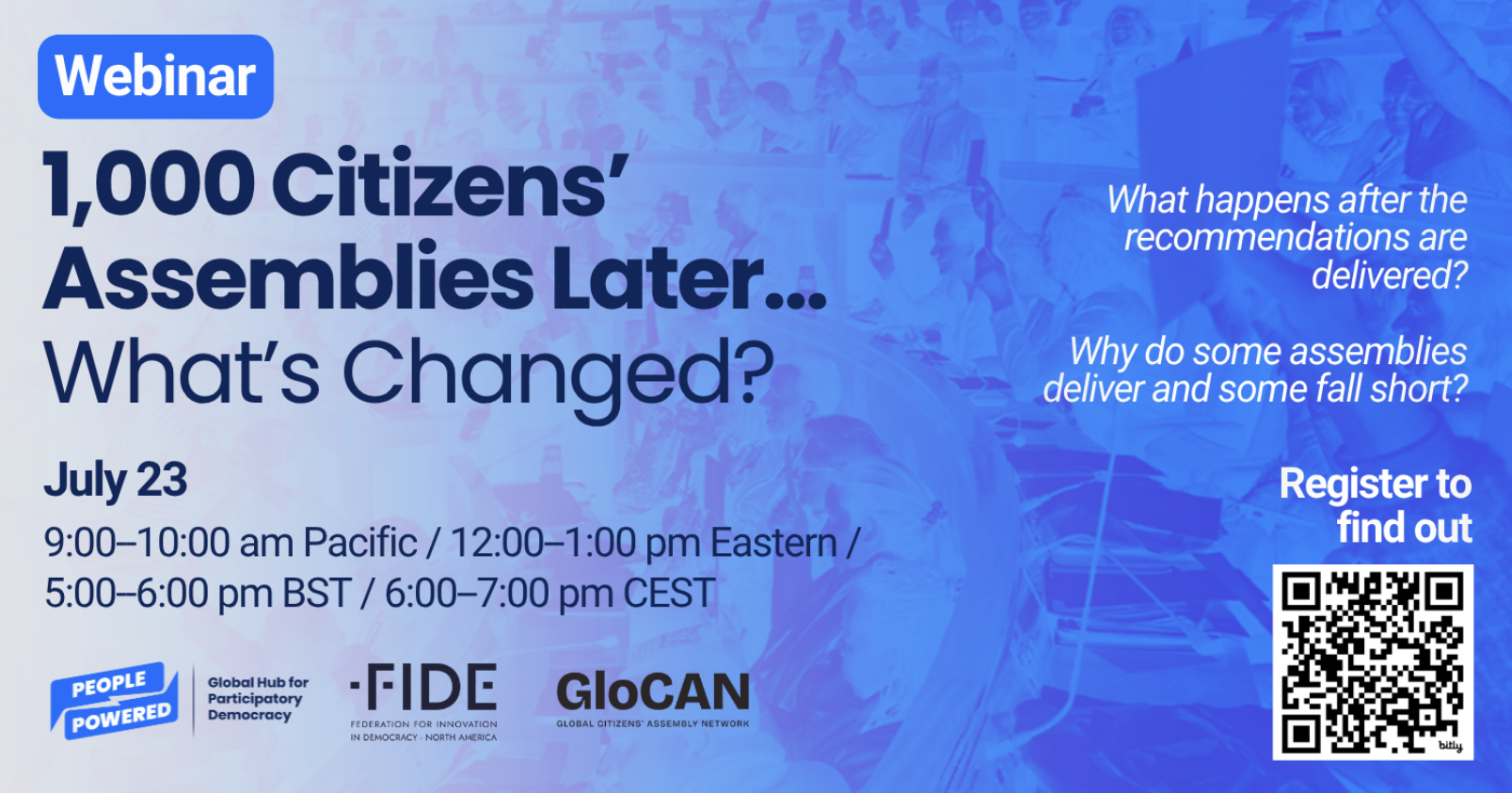
Join People Powered for a webinar that brings together researchers and practitioners to share the latest findings and lessons learned from cases where assemblies have driven real policy change, as well as those where results have proved more elusive, including what we've learned about effective advocacy and assembly design.
Date: July 23
Time: 9:00–10:00 am PT / 12:00–1:00 pm ET / 5:00–6:00 pm BST / 6:00–7:00 pm CEST
In the News
— Yellow Scene Magazine: ‘Experiments in Public Art: A Boulder Future’ Exhibition Opens June 8 (Published June 8th, 2026)
— City Watch LA: Residents of Los Angeles Call on City Council: Let the People Govern (Published June 8th, 2026)
— Seattle Times: Op-Ed - Snohomish County is showing us what civics looks like (Published June 11th, 2026)
— Project Save the World: Voices of Citizens (Published June 24th, 2026)
— Ash Center for Democratic Governance and Innovation: City Charters are Deliberative Democracy’s Friends (Published July 7th, 2026)
We’d like to congratulate our partners for the incredible work they are doing putting the public back in public policy. See the full scope of our advisory and evaluation work below.