
Inside Ukraine's quest for democratic participation
A chronicle from our work supporting three citizens' assemblies in 2026
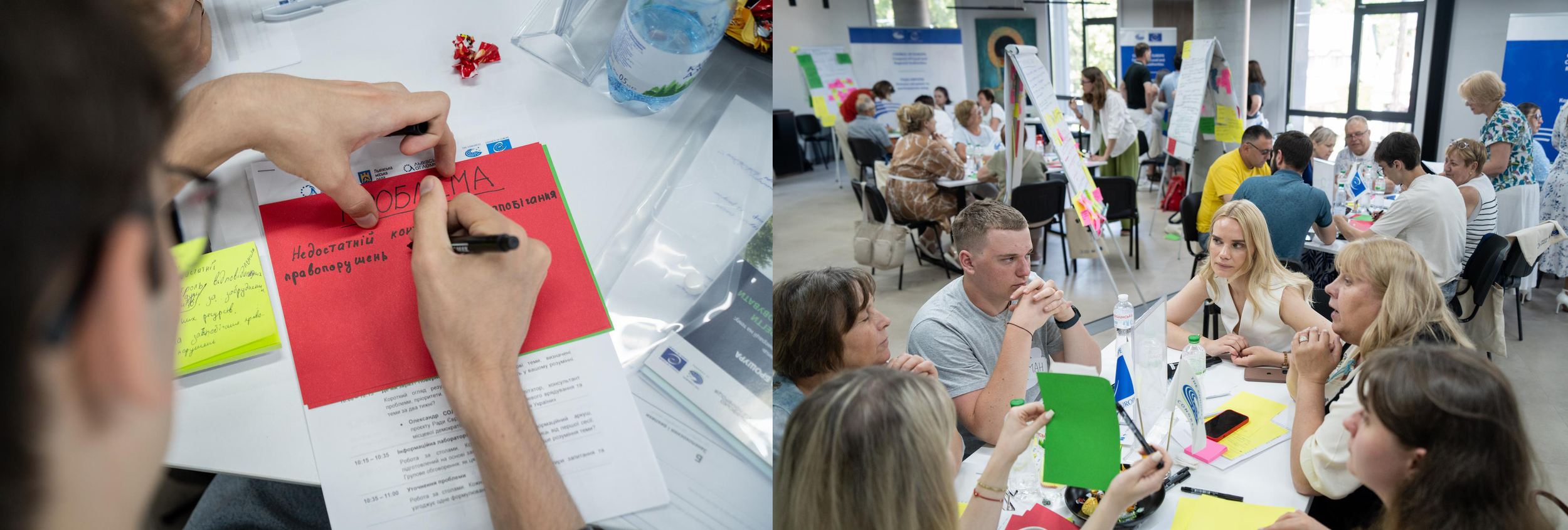
Since the start of the year, Ukrainian local authorities have completed two citizens' assemblies, and a third has just presented its recommendations. The topics have ranged from the direct consequences of the war, like Kyiv's assembly on supporting veterans and their families, to long-standing challenges the war has made more urgent, like Rivne's assembly on keeping young people from leaving their community. In this piece, we travel to Lviv to attend the second weekend of the third and final assembly.
"Democracy doesn't pause for air raids," says Daryna Sokolova, the Council of Europe's Senior Project Officer leading the implementation across all three assemblies. Despite extraordinarily challenging circumstances, local authorities, project teams, and citizens in Kyiv and Rivne delivered their recommendations on time. The citizens have done their part. Now it is up to Kyiv and Rivne's city councils to turn those recommendations into concrete decisions.
As an expert partner in this project, we have provided training, design guidance, and methodological advice throughout the effort. "I'm incredibly proud of the work that FIDE has been doing in Ukraine, but that pales in comparison to how in awe I am of the strength and dignity of the participants, the facilitators, the experts and the people of Ukraine," says Kyle Redman, our Program Manager leading this work. His latest visit took him to Lviv, where the third assembly is bringing together communities from across 13 municipalities of the agglomeration to tackle sustainable water management.
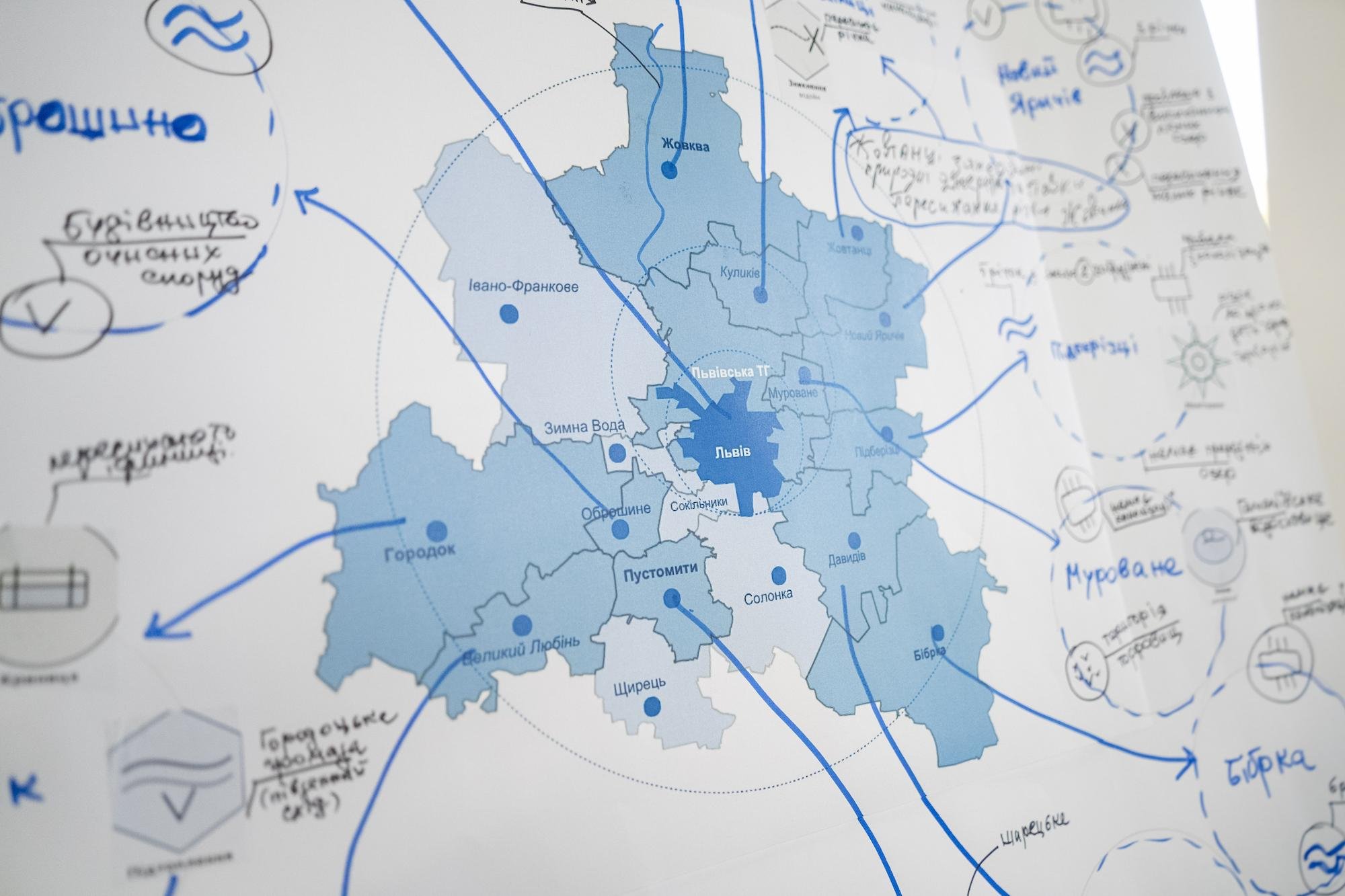
Lviv, the largest city in western Ukraine, sits about 70 kilometers from the Polish border and is home to just over 700,000 people. Since the Russian invasion, it has become a secondary, strategic capital for the country, as media, government agencies, and people displaced from Kyiv and the east have relocated there. Despite several Russian strikes, it continues to serve as a crucial humanitarian and logistics hub.
Kyle attended the second weekend of the assembly, where participants deepened their understanding of the topic through expert input, group discussions, and a study visit to the Hrybovychi landfill site, one of the largest municipal waste disposal sites in Ukraine. Participants had requested the visit during the first session.
What follows is Kyle's account from the ground: a chronicle of that weekend, the people he met, and what this work means for Ukraine's recovery.
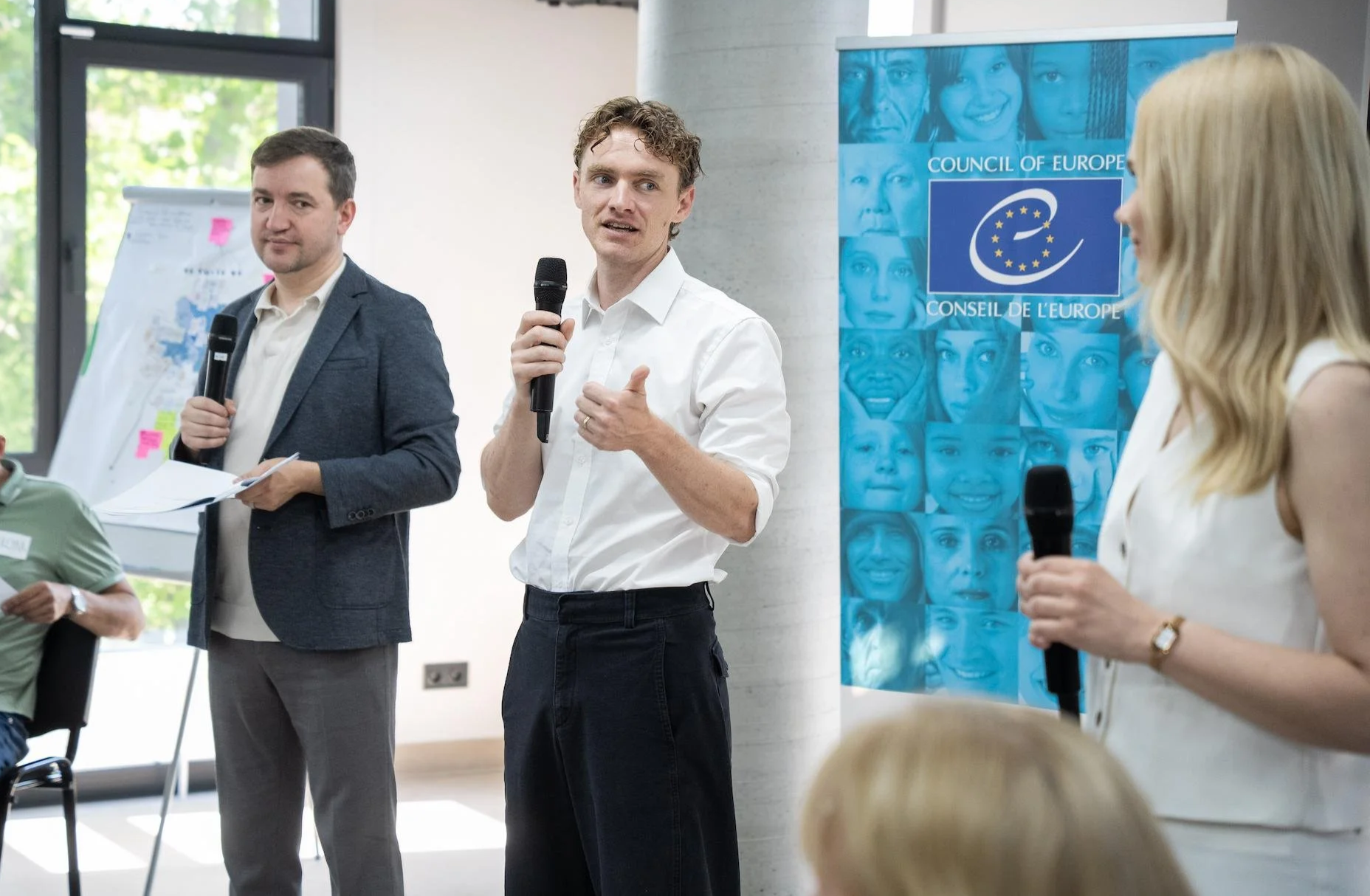
Left to right: Oleksandr Solontay, Kyle Redman, and Daryna Sokolova.
Since May 2025, I've been training, mentoring and supporting facilitators and citizen participation consultants in Ukraine for the delivery of three citizens' assemblies in 2026. Working closely with Daryna and her team - Liliia Apostolova and Viktoriia Humenuik, we designed a series of trainings to help prepare the different stakeholders.
Initially, this involved introductory Zoom sessions for civil servants, local consultants and representatives from civil society organizations. The aim for these sessions was to help prospective municipalities accurately tailor their proposals for hosting assemblies with support from the Council of Europe.
Once the municipalities and consultants had been selected, I ran a half-day online session going deeper into the weeds of how to design and run an assembly. Not much preparation all things considered but many of the facilitators and consultants had experience from two assemblies in Zvyahel and Slavutych, plus I would then work closely with the lead facilitators to prepare facilitation runsheets and support on recruitment design.
Training on Zoom is challenging. It was made even more so here because everything was done through interpretation. I tend to talk quickly as it is, but trying to slow down for interpretation while trying to fit as much into 4 hours of training was tough. I really enjoyed training everyone, especially going back and forth on WhatsApp answering all kinds of different questions as they arose (as they always do with every deliberative process). We had different perspectives on some points, for instance, whether or not to have table moderation, or how regularly to mix up the groups. I deferred to the local institutions on these points but I think it's always very interesting to see how different cultures and communities implement the basic ingredients of deliberation.
I felt quite invested in the success of these assemblies but was not expecting to ever get the chance to see them — due to the Russian invasion of the country in 2022 and the ongoing war. However, Lviv is in the far west of the country, and as far as these things go, it is relatively safe and less affected by the war on a day-to-day basis. And so, when I received an invitation to visit the Lviv agglomeration Citizens’ Assembly, it was an enthusiastic yes.
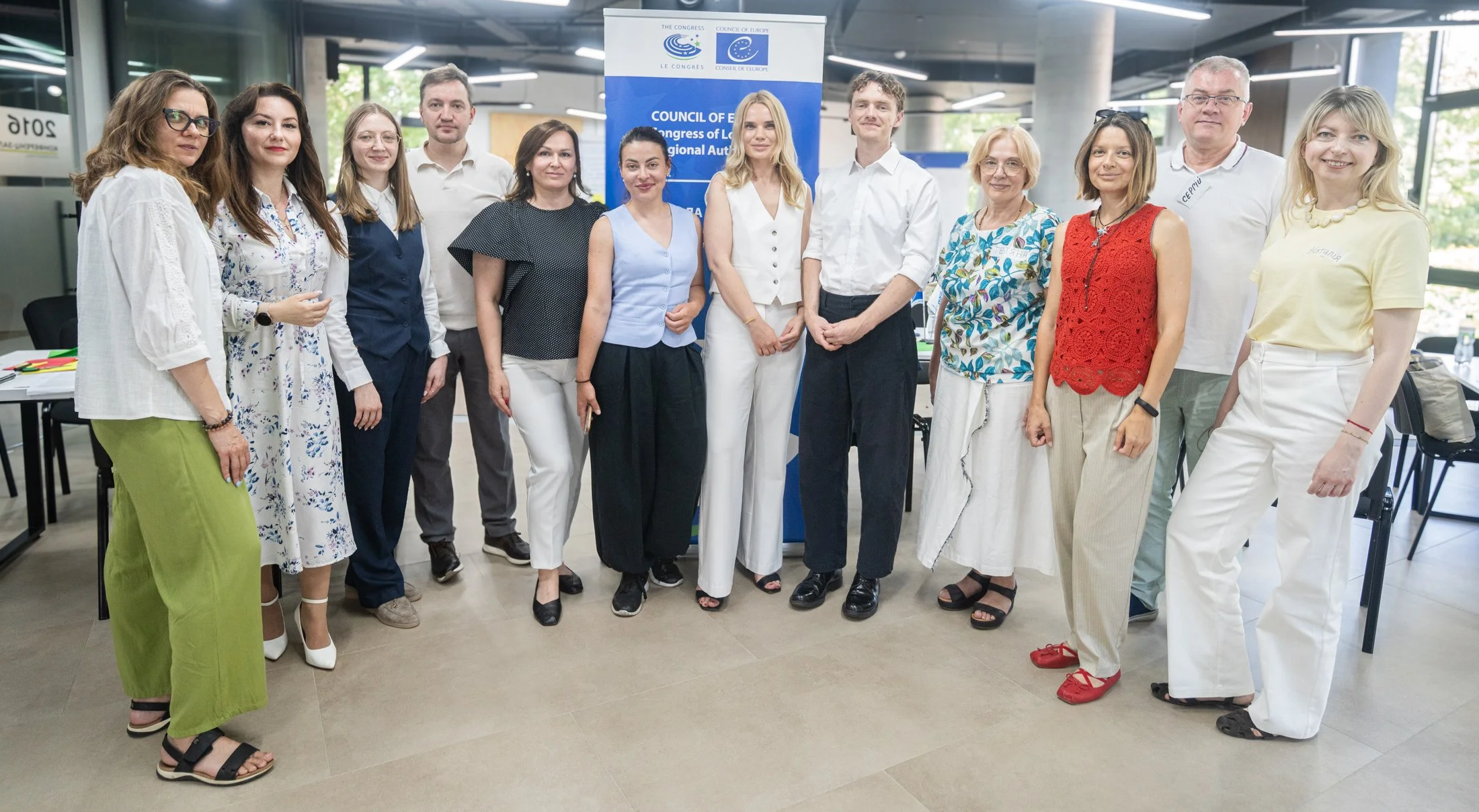
The team behind the Lviv Citizens' Assembly
My Friday, June 26 journey from Brussels to Lviv started tracking the heat wave east with a fly to Kraków and then the train to Przemyśl, a small town in eastern Poland that has become one of the primary border crossings between Ukraine and Poland. There, I would meet up with Olga Gvozdik (lead citizens' assembly consultant for the Lviv assembly, who has also worked on the other assemblies in Ukraine) and Oleksandr Solontay (lead facilitator for the assembly, and a well known civil society representative in Ukraine), who were making the long drive south from Gdansk, where they were attending the Ukraine Recovery Conference. We crossed the Poland-Ukraine border at the new Malhowice - Niżankowice road border crossing (my first time passing through immigration at a land crossing, aided by the locals, who were able to explain to an Australian in their company) and continued until we arrived in Lviv just after midnight.
I will write a longer piece (likely on a yet to be created personal blog) on the details and emotions of this trip, but for now, I will focus on the assembly process itself. I was attending the middle weekend of the assembly, which typically is the transition from focusing on learning and understanding the problem to developing the seedlings of ideas and recommendations.
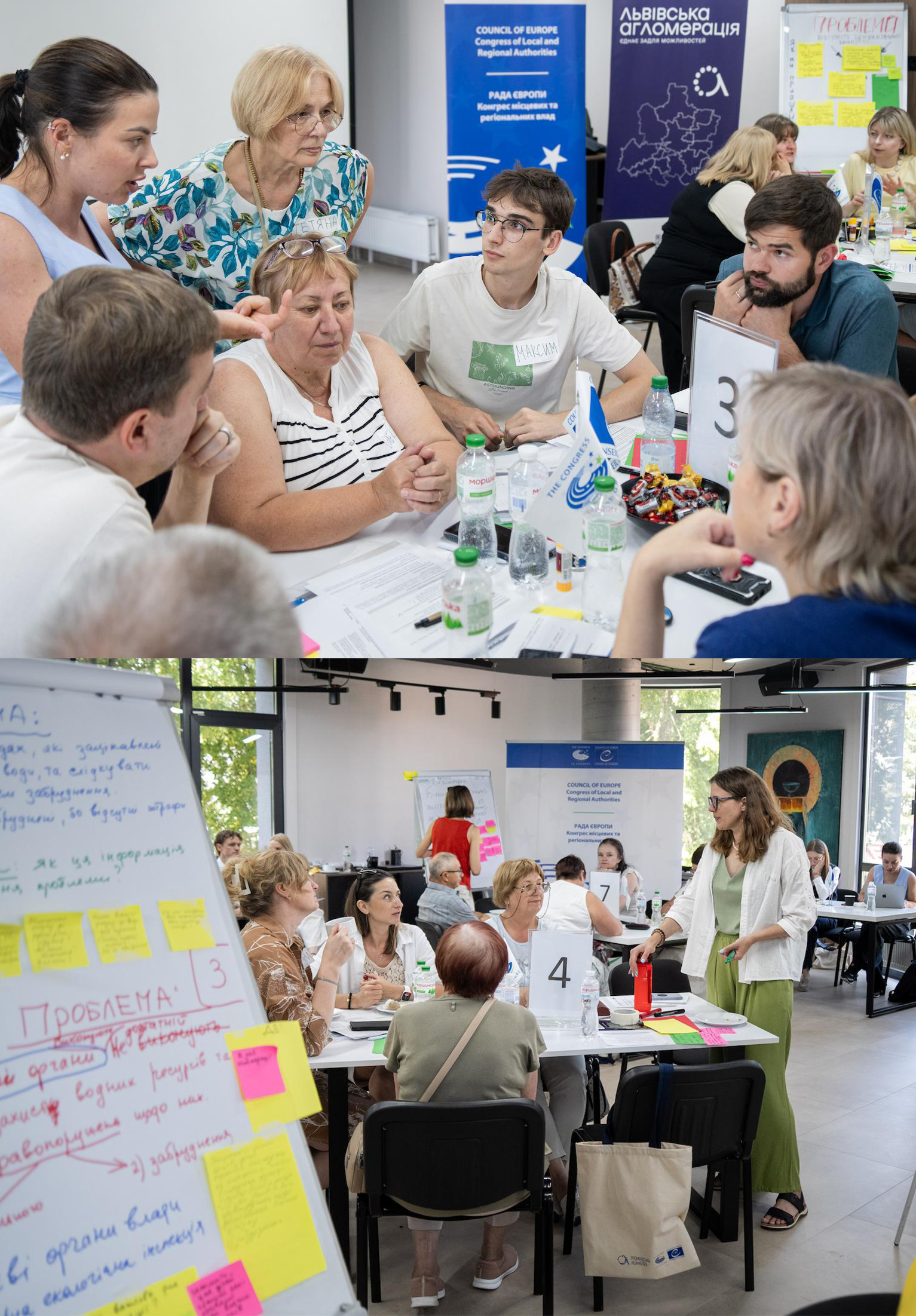
I was pleased to be reminded that – as Yves put it when I sent him a photo – in the end, every assembly looks pretty much the same: enthusiastic participants seated in small tables working diligently between coffee breaks. This is handy because the only Ukrainian I understand is "Slava Ukraini", but as I've explained to others when observing assemblies in French or training facilitators in Spain, you don't need to know exactly what people are saying to grasp the broad brush strokes of the process and its underlying logic. A translated runsheet, body language, and templates convey a lot of the important information from a process observation point of view. If something particularly interesting looks to have happened, I could always raise it with Daryna or Viktoriia for quick translation.
The similarities continued to other aspects. I interviewed some of the participants with the help of Viktoriia's interpretation services. Many were excited to take part in such a new initiative, and some raised skepticisms of the extent to which the government would listen and act on their recommendations.
Darya, a 28-year-old social worker, who normally would be living in Zaporizhzhia if not for the war and the destruction of the Kakhovka dam, said that while the assembly was interesting for her,
"it will be useful for those in power, too – a reminder that they are not the main decision-making body. The people of Ukraine make the decision."
Maryan, a lifelong resident of the region, made a point that really resonated with me and my work across the globe when he said:
"Maybe our society isn't completely ready for this format yet. But it's precisely by holding them that we'll get better at them. We need to practice, do more of them, and then it will get better."
This comment could relate to a range of different aspects of the process. Did the Ukrainian people need different kinds of facilitation to get the most out of them in such a process? A facilitator mentioned to me that some of the older participants, those who grew up under Soviet rule, were not accustomed to voicing their political opinions; it was a subconscious barrier that would need support and time to overcome. I think it was a wise reflection that translates to almost all societies. We need to continue practicing, improving, and adapting to new ways of making public decisions that empower the public and support leaders to make sound and representative decisions.
Some members, like Darya, are internally displaced, deliberating about a community's future while their own home is a front line. That people still choose to give up a Sunday, on a national holiday, during a war, to discuss carefully about water tables and septic tanks is a demonstration of the appetite for self-governance.
On Sunday, it was Constitution Day in Ukraine. Some participants wore their traditional Vyshyvanka, a traditional embroidered shirt. Maryan said:
"It's symbolic, actually — that on Constitution Day we can be part of making decisions. Not the Constitution itself, but specific laws and the like."
I'm incredibly proud of the work that FIDE has been doing in Ukraine, but that pales in comparison to how in awe I am of the strength and dignity of the participants, the facilitators, the experts and the people of Ukraine. This country is poised to become a real lighthouse for deliberation in Europe.
The citizens' assemblies are organized and implemented within the Council of Europe Action Plan for Ukraine "Resilience, Recovery and Reconstruction" for 2023–2026 and the project "Strengthening multilevel governance and local democracy to support Ukraine's recovery", implemented by the Council of Europe Centre of Expertise for Multilevel Governance at the Congress of Local and Regional Authorities.
For context and more information about our support to assemblies in Ukraine, you can read our previous issues.
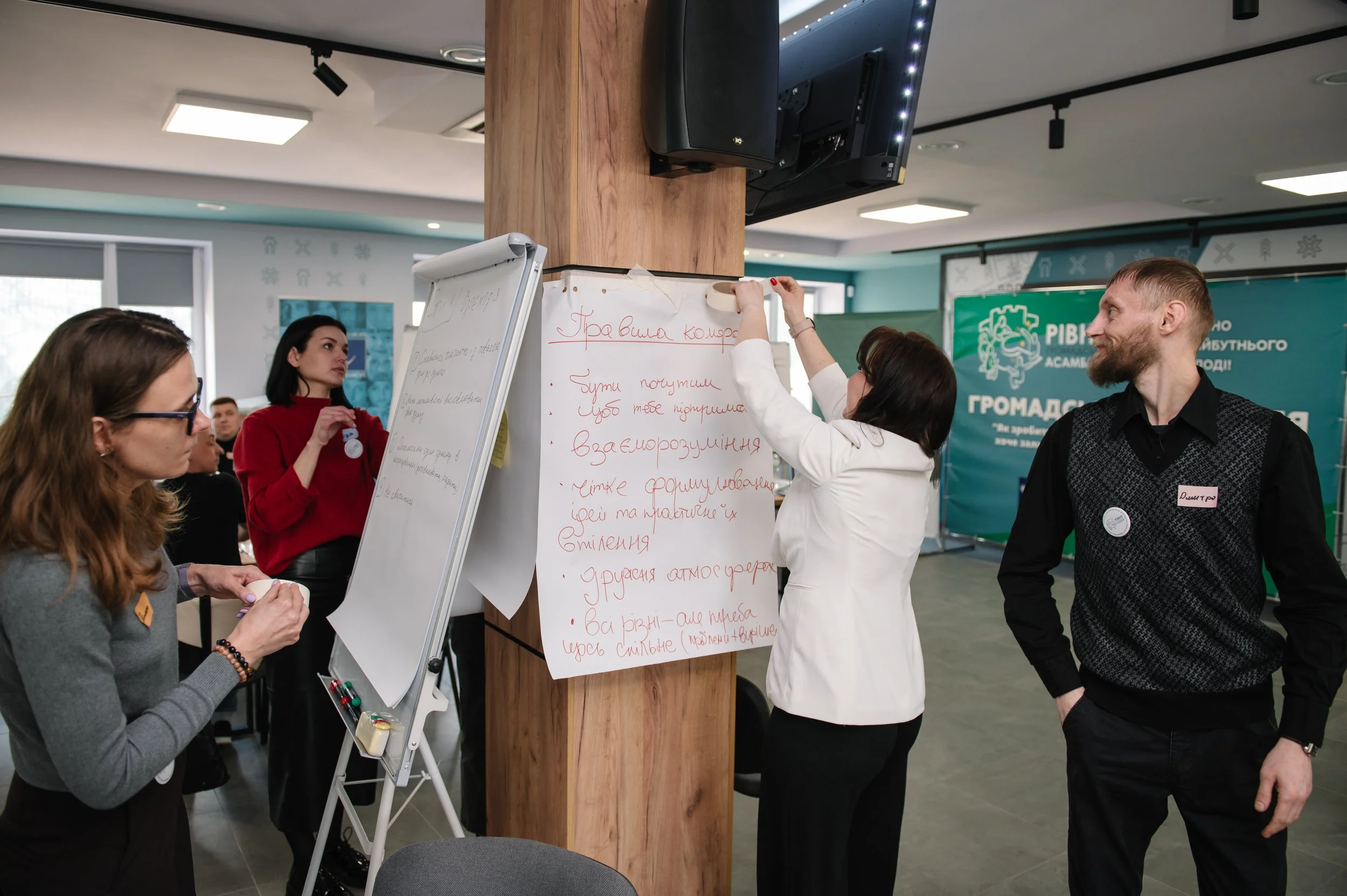
Deliberation during wartime
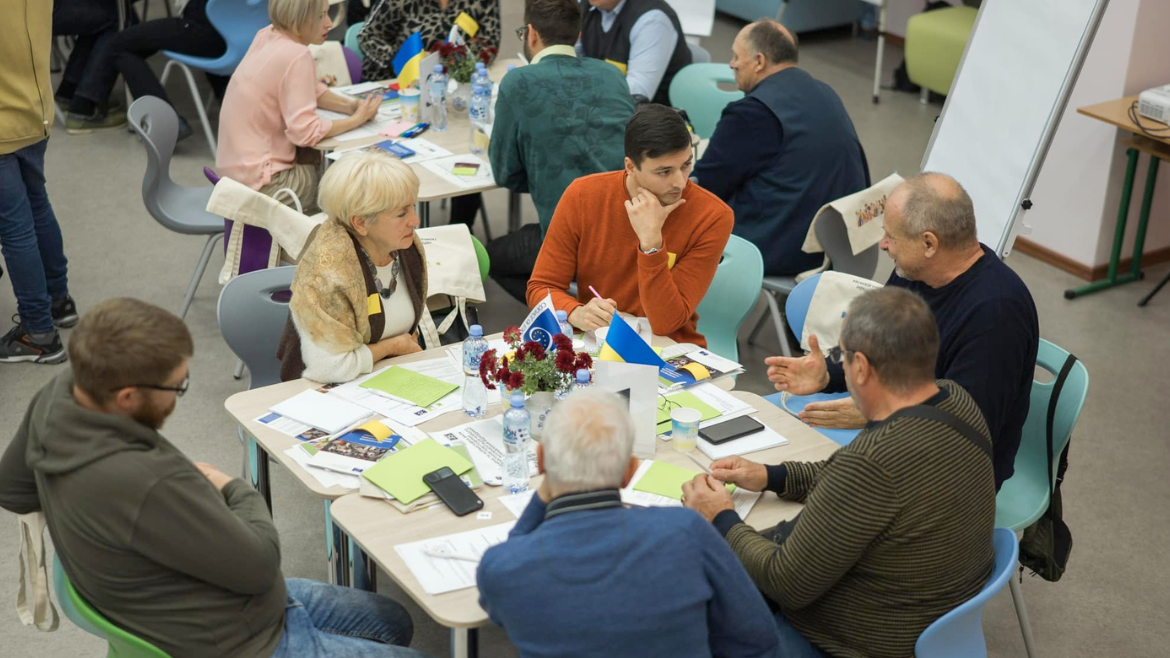
Supporting Ukrainian communities through deliberation
UPCOMING EVENTS & DEADLINES
Lead Facilitator Masterclass
September 14 to 16, Demokrati Garage, Copenhagen
Application deadline: July 31
Taking the lead on a citizens' assembly means holding responsibility for the whole deliberative process, not just facilitating a room. This masterclass is built for experienced professional facilitators who already know citizens' assemblies well and are ready to step into that role. Over three days in Copenhagen, in partnership with We Do Democracy, participants will work through the real judgment calls of lead facilitation: shaping the agenda, guiding a group through disagreement, and steering a process toward credible recommendations.
FIDE Forum 2026: Call for Workshops
November 18 to 19, Vienna, Austria
Deadline: July 17
We are looking for contributions that can grow and improve the field!
Workshops are a chance to tackle the open problems in our field; build new skills, dig into contentious topics, and connect participants who might not otherwise cross paths. Join us and shape where deliberation in Europe should go next.
From novel to normal: deliberation as democratic infrastructure
The Forum brings together practitioners, public officials, political parties, NGOs, and funders to move this field from the margins to the mainstream. To build the infrastructure, lift the standards, and create the political will to make it permanent.
WHAT WE ARE PACKING FOR SUMMER (SPOILER: BOOKS)
We asked around the team what is making it into their bags this summer. Here are the picks we suggest you take along too.
Enshittification by Cory Doctorow. Doctorow's own word for what has happened to the platforms we rely on: they win us over with convenience, lock us in, then quietly strip away everything good once leaving costs too much. He argues this decline was never inevitable, just a series of deliberate policy choices, which means it can be reversed too.
Invisible Women by Caroline Criado Perez. A deep dive into how the world quietly gets built around men by default, from car safety tests to medical research to city planning. It is the kind of book that changes how you notice things afterward.
Polsslag by Peter Vermeersch. Minsk, summer 2020. As Belarus's authoritarian government cracks down on protesters, a decades-old Soviet song becomes an anthem of resistance, sung and whispered across Belarus, Ukraine, and Russia. Vermeersch follows Nadja, Vova, Pjatro, and other young musicians whose voices turn into instruments of defiance, some arrested, others forced into exile, in a book about loss, perseverance, and what gives people the courage to keep fighting.
The Martian by Nona Fernández. A Chilean writer visits Mauricio Hernández Norambuena, the former guerrilla behind the 1986 assassination attempt on Pinochet, now serving a long sentence. Through his voice and the voices of those around him, the novel builds a strange, personal portrait of a man history has mostly flattened into a headline.
Freedom: An Unruly History by Annelien de Dijn. De Dijn argues that today's idea of freedom, that it means limiting what government can do, is a surprisingly recent invention. For most of Western history, she shows, freedom meant something closer to self-government: the ability to control how you are ruled. The now-dominant idea of freedom as small government, she argues, was not born from the revolutionaries who built modern democracy, but from the people who opposed them.
The Anthropocene Reviewed by John Green. Grown out of his podcast of the same name, Green's first work of nonfiction reviews pieces of the human-shaped world, from the QWERTY keyboard to Halley's Comet to Penguins of Madagascar, on a five-star scale. Each review doubles as something more personal, building into a collection about what it means to share this particular moment on Earth.
Seeing Like a State by James C. Scott. From forced villagization in Tanzania to Soviet collectivization to the Great Leap Forward, Scott looks at why grand twentieth-century plans to engineer a better society so often ended in disaster. His answer: when states impose rigid, top-down schemes on complex human life without listening to local knowledge, and without a civil society able to push back, the results tend to be catastrophic.
Empire of AI by Karen Hao. Hao started covering OpenAI in 2019 believing they were the good guys, a nonprofit built around AI safety. What she found instead, over years of reporting, was an industry that runs on an almost unimaginable amount of resources: computing power, vast troves of data, underpaid data workers across the Global South, and rising water and energy use. Drawing on sources inside OpenAI and around the world, she traces how a mission to build safe AI became a race not even its own leaders can fully explain.