
What happens after a Citizens’ Assembly ends?
Why we’ve launched the Impact Amplifiers Network (IAN) to help participants stay connected and engaged.
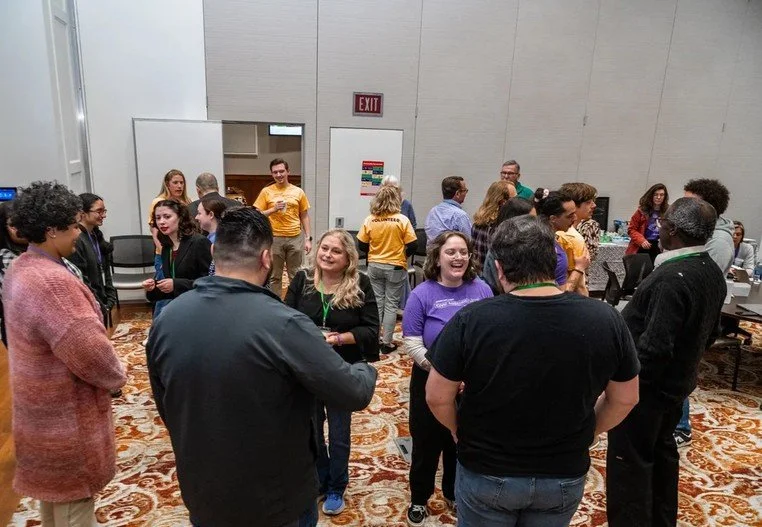
Participants mingle at the Lexington Civic Assembly (2026)
Before participating in the 2024 Deschutes County Civic Assembly on Youth Homelessness in Oregon, Brenda Gail Hudson was wondering what the next chapter of her life might look like. Having experienced homelessness herself, she felt a personal connection to the issue the Assembly had been convened to address.
Hudson was one of 30 residents taking part in the assembly, where participants shared their experiences and worked toward solutions to a problem affecting lives across the country.
The experience stayed with her. After the assembly concluded, Hudson left her job cleaning houses, and eventually became a case manager at a local nonprofit, serving others experiencing homelessness. In an interview with Oregon Humanities in 2024, she described the Assembly as a “gift from God” that led her to this new career path.
Hudson wasn’t the only one affected. One year after the assembly concluded, more than two thirds of participants reported higher levels of civic engagement. Her story is just one of many examples showing that the impact of citizens’ assemblies extends far beyond the recommendations they produce. Assemblies change how people understand their place in democracies and what they believe they can contribute.
But not everyone has the ability to act on their initiative like Hudson. So, if the assembly is just the beginning, what support do participants need once the process has concluded?
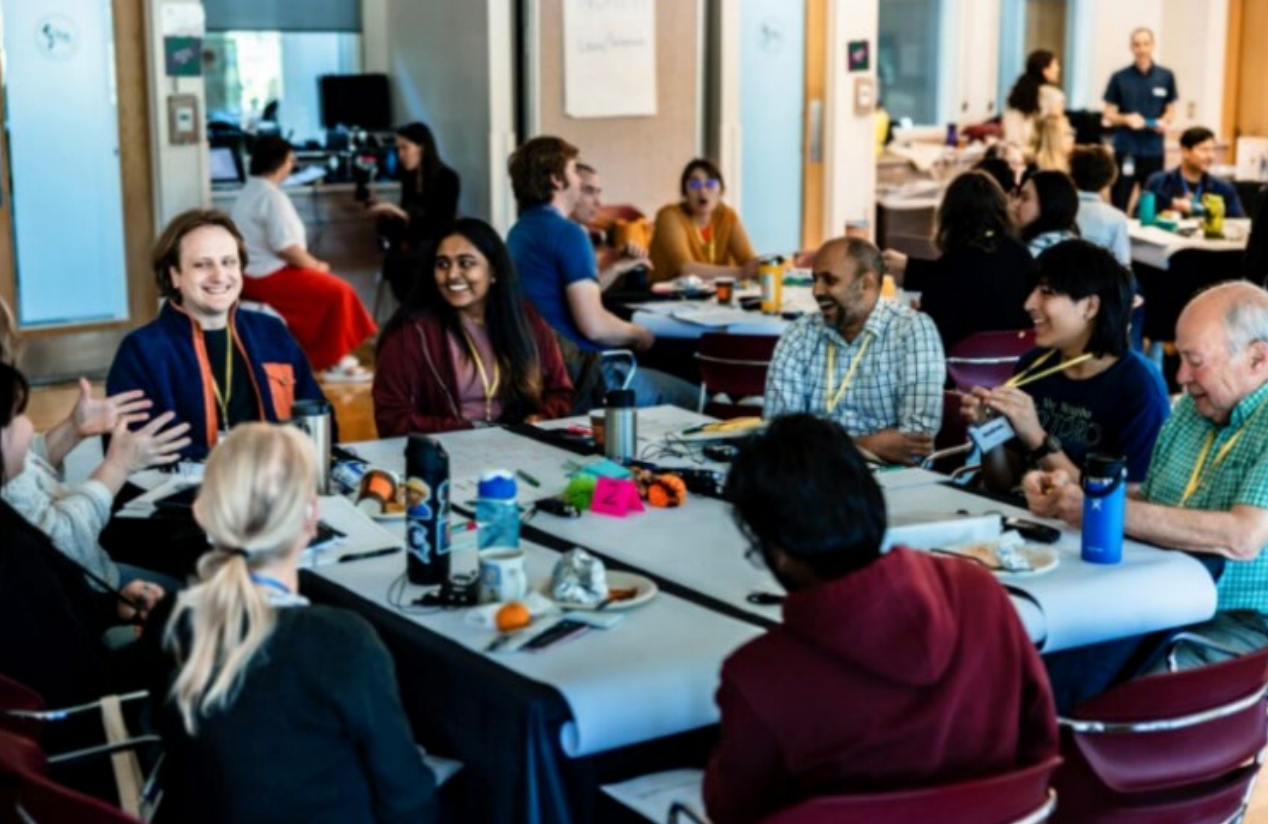
Participants connect at the Boulder Valley Community Assembly (2025)
Citizens’ assemblies offer connection, education, and structured dialogue that can be otherwise difficult to find in everyday life. That the experience ends in members creating a set of policy recommendations together gives the entire experience a feeling of accomplishment often elusive when it comes to collective problem solving. It’s no wonder that these processes can feel so profound to those who take part.
In our independent evaluation of the 2025 Boulder Valley Community Assembly, our surveys found that 87% of participants felt an increased sense of community, and a 15% rise of confidence in their capacity for civic engagement. Our evaluation of the Lexington Civic Assembly found that sense of community was felt by 96%, and confidence to participate in politics rose by 26%. These are staggering increases, but they should not be surprising. After all, fostering community and trust in institutions is intrinsic to the assembly process. Participants build relationships and gain in-depth civic knowledge over the course of weeks, if not months.
For people who may never have considered themselves involved in politics or policy, the experience can change how they see themselves. They are not just residents affected by decisions, but citizens capable of helping shape them.
As Citizens’ Assemblies continue to emerge across North America, more people are experiencing this kind of democratic participation firsthand.
The Assembly ends, the desire to participate does not.
For Alex Lehman, another participant in the Deschutes County Assembly, the experience was a catalyst for further action. Reflecting on the process in an interview with Oregon Public Broadcasting, he described how it changed his relationship with civic life, galvanizing him and another participant to reach out to Bend City Council and the Deschutes County Commissioners.
“It was almost life-changing, in the sense that it kind of jump started my drive to get more involved…It was a good stepping stone to get more involved and start holding our local leaders accountable.”
-Alex Lehman, Participant in the Deschutes County Civic Assembly, to Oregon Public Broadcasting
In Lexington, Kentucky, Shelly Kuhl reached a similar conclusion after participating in the city's first Civic Assembly in 2026.
“This has really opened my eyes to wanting to be more involved and holding people, my council member, accountable so that they know where I stand on issues.”
-Shelly Kuhl, Participant in the Lexington Civic Assembly, to WKYT
Others have taken their newfound civic confidence directly into the public sector. In Boulder, Colorado, Jamillah Richmond went on to run for City Council after participating in the Boulder Valley Community Assembly. Fellow participant Alejandra Nieland Zavala also took on advisory role at the city after serving on the assembly’s presentation committee, and was appointed in 2026 to Boulder’s Human Relations Commission.
These stories inspire us, showing what’s possible. But what happens to everyone else who leaves an Assembly motivated to contribute, without an obvious next step?
The problem is not that participants lack the capacity or desire to engage. It’s that the assembly process often has no plan for what happens to that energy after the recommendations are presented.

To better understand what participants want after an assembly, we surveyed 70 members from past processes across the United States and Canada.
The findings revealed a conspicuous gap between the desire to stay involved and the opportunities available.
More than 80% expressed interest in joining a network connecting Assembly members.
Fewer than 30% belonged to a group connected to their own assembly.
73% were interested in working with like-minded individuals to pursue policy reform.
More than 58% wanted to become more involved in other Citizens’ Assemblies and deliberative democracy.
People want to stay connected, to collaborate with others and turn their experience into meaningful change. But enthusiasm alone cannot sustain engagement. Participants need ways to follow up on recommendations, communicate with decision-makers, and discover new avenues for civic participation.
Without those structures, the connections formed during an assembly can fade, and the motivation it inspires can go untapped.
An assembly is a transformative experience, but sustained citizenship requires investment after the experience has concluded.
We know what is possible when engagement continues.
In 2023, Unify America brought residents together in Colorado to deliberate on the community’s shortage of affordable childcare. When the assembly ended, participants and local volunteers kept going, creating an independent, resident-led nonprofit, Unify Montrose.
Since then, Unify Montrose has continued bringing residents together to address community challenges, including winter shelter for people experiencing homelessness and opportunities for youth. Montrose shows that a citizens’ assembly can be the starting point for an enduring culture of civic collaboration. With the right support, people can continue working together long after the formal process ends.
Another example comes from the 2022 Fairgrounds Civic Assembly in Petaluma, CA, where delegates received funding for an additional 15 hours of compensated engagement with community members and decision-makers to discuss their recommendations.
Not every assembly needs to become a nonprofit, and not every participant will want to become a lifelong activist. But those who take part in these processes deserve the choice once they finish, whether that’s through platforms, training, webinars, or other opportunities that help them stay connected and build out their capabilities as civic leaders.
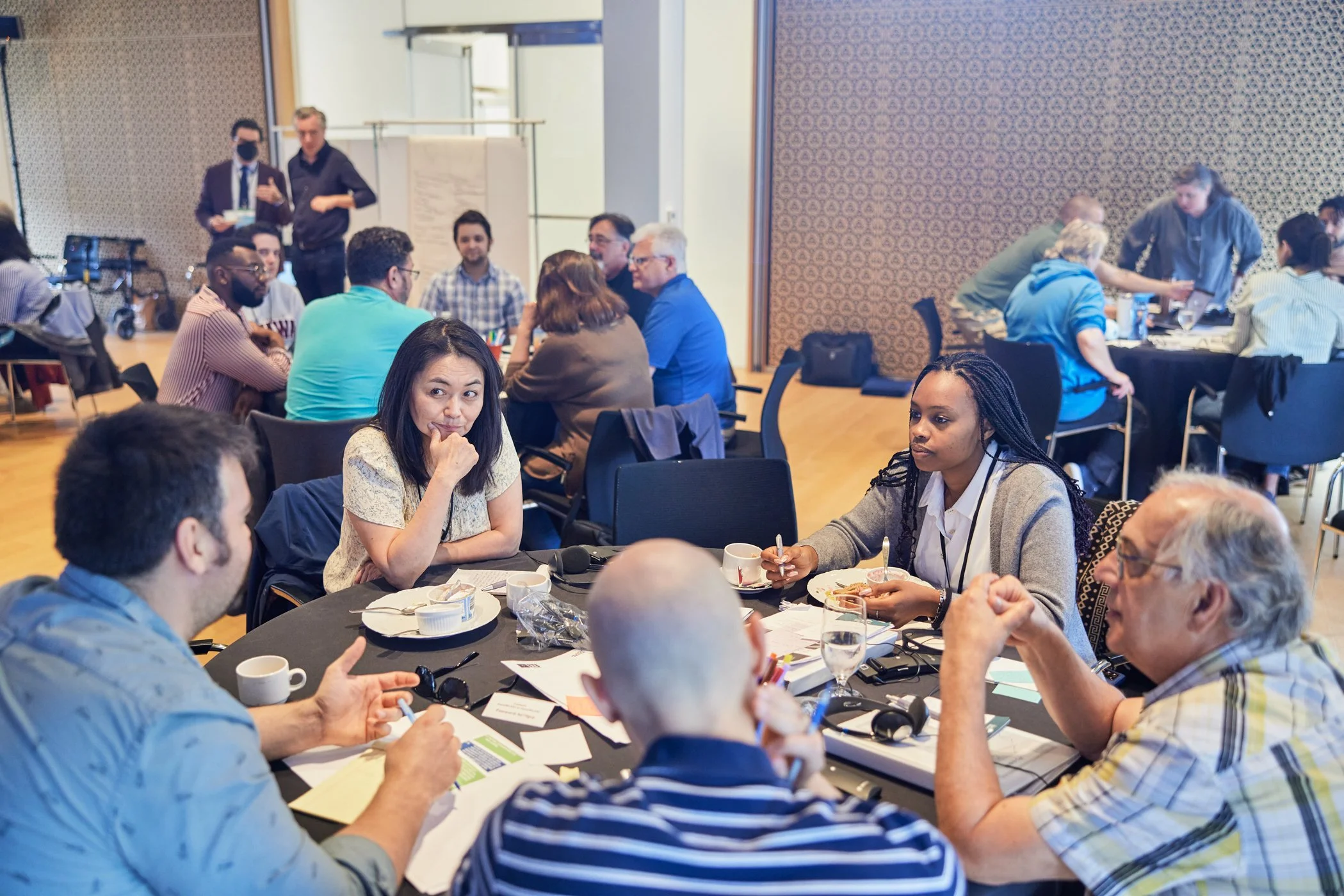
Assembly members deliberate at the Canadian Citizens' Assembly on Democratic Expression (2022)
What would it look like if continued engagement was the rule, rather than the exception? If these opportunities were considered part and parcel of the process, rather than leaving participants to find them on their own?
If assembly members return to everyday life without ways to maintain their relationships or act on what they have learned, governments may lose potential partners in implementing recommendations. Communities might lose emerging civic leaders. The wider public could potentially never hear the stories of people whose experience with deliberative democracy inspired them to make a difference.
Throughout the United States and Canada, ordinary people have experienced a different kind of democracy firsthand. They have built relationships across differences, developed new skills, and discovered that their voices matter. Many leave wanting to do more. The question is whether we are prepared to meet that desire with the support it deserves.
At FIDE North America, we’re making continued engagement for participants possible through the Impact Amplifiers Network (IAN), a new online space for assembly members to stay connected, learn from one another, and find opportunities to contribute beyond their own process.
If you’ve helped organize or implement a citizens’ assembly, we’d love to hear how you’ve kept participants engaged after the process ended. And if you’ve participated in an assembly yourself, we invite you to join the Impact Amplifiers Network and connect with others who share your experience.
It’s time for a reframe. For participants, the end of an assembly is just the beginning of their journey.
What We Are Up To
Our first-ever Impact Report is here!
Since launching in January 2024, we’ve trained 250+ civic leaders, helped advance 8 citizens’ assemblies, published the first Theory of Change for citizens’ assemblies, and built a growing evidence base for what meaningful public participation can achieve. But we’re just getting started - discover the people, progress, and possibilities driving our mission to make citizens’ assemblies a lasting part of public decision-making.
Check out the full Impact Report
Partnership with the Cambridge Civic Assembly
On October 5th, the City of Cambridge hosted a civic lottery for its first-ever assembly! Cambridge Mayor Sumbul Siddiqui attended the lottery and assisted in the drawing of the 40 participants joining from across the city, saying, "Today is a really historic day for our city." She's absolutely right. We’re honored to be a part of this work, advising and supporting the Cambridge team as the the process gets underway.
Upcoming Trainings
This month, we will be co-hosting three different training programs across the United States.
The Lead Facilitator Masterclass is coming to North America, where we will be joined by people who have designed and led dozens of citizens’ assemblies in Canada, Denmark, Germany, and beyond - including We Do Democracy Executive Director Zakia Elvang, deliberative facilitation advisor and trainer Jacob Birkenhäger, MASS LBP Principal Peter MacLeod, and our own Executive Director Marjan Horst Ehsassi. This training will be offered on both coasts: October 15th-17th in Washington, DC, or October 22-24 in San Francisco, CA.
And right in the middle, we will be co-hosting our Civic Assembly school with the City of Richmond. From October 21st-23rd members of the local community will come together to learn more about implementing these processes, learning from representatives from FIDE, CivicLex, the City of Boulder, and Unify America.
We are in ongoing discussions with cities around North America to build capacity for these processes - and would love to hear from more. Contact us if you are interested.
Want to learn about our other programs?
Our team is hard at work with some amazing projects, check out the latest case studies in our Learning Series and read about our Deliberative State Governance initiative below:
In the News
— Cambridge Day: Civic assemblies, common in Europe, have helped build trust (Published August 19th, 2026)
— WTNH8: Connecticut Citizens' Assembly on Property Taxes meets to discuss recommendations (Published August 29th, 2026)
— City of Cambridge: City of Cambridge Launching Its First Civic Assembly on Surveillance Technology (Published September 2nd, 2026)
— KQED: Oakland Mayor Lee Says She Will Try to Fund Civic Assembly’s Vacant-Lot Ideas (Published September 14, 2026)