
Democracy needs a budget line
A conversation on funding participation and the next EU budget
WEBINAR | Friday, October 9, 2026 | 10:30 to 12:00 CEST
What democracy needs from the MFF
The next EU Budget, called in EU language the Multiannual Financial Framework (MFF 2028-2034), is being negotiated at a moment when the funding landscape for democracy is becoming more precarious. Global development assistance fell by an estimated 9 to 17% in 2025, on top of a 9% drop in 2024, as International donors are scaling down. Authoritarian actors have moved into that gap, funding movements that seek to weaken democracies, while many governments have cut support for the civil society groups trying to counter that pressure.
The European Commission has proposed €8.7 billion for democratic resilience through AgoraEU. That sounds significant, until it's seen against the scale of the EU budget as a whole, where it comes to roughly 0.5% of the total budget. Budgets are a statement of intent, and a number this small contradicts the claim that democracy is a strategic priority.
That’s why, together with Alliance4Europe, we have developed a position paper with 9 recommendations the EU can act upon to meet the moment and safeguard democracy. It presents a detailed case for what should change, focusing especially on AgoraEU and ensuring democratic resilience is reflected across the rest of the budget.
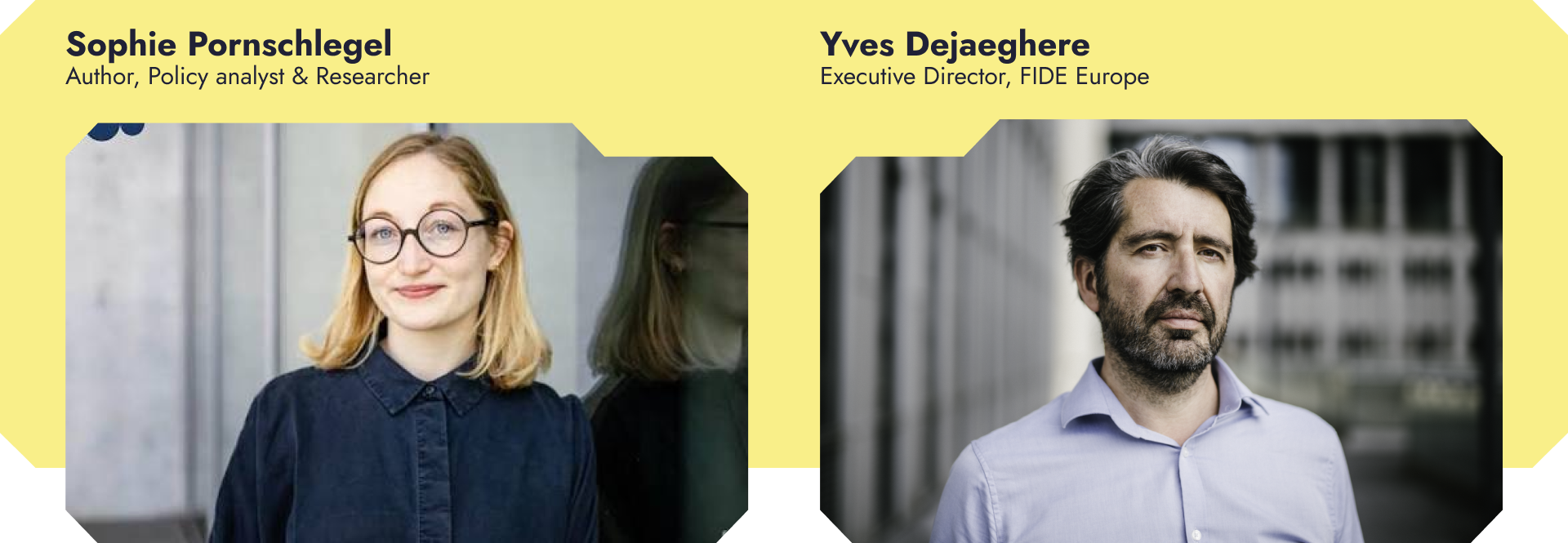
Sophie Pornschlegel, author, policy analyst and researcher, will open the webinar with the key points from the paper and the case for backing democracy with lasting funding. She will be joined by our Executive Director, Yves Dejaeghere, coauthor of the paper, to discuss which recommendations would move the needle most, and what they would mean for deliberative democracy, civil society and local governments.
The funding landscape for deliberative and participatory processes
Processes that bring citizens into public decision-making have often been considered a cheap extra on top of how policy normally is made. They are left out of long-term budgets, requiring tailored tenders that create constant negotiation and perceived conflict with competing demands. It is exactly why they are the first to be cut when budgets are tight, and why they tend to stay as pilot projects instead of becoming a normal part of how institutions govern.
Shrinking budgets for deliberative democracy are not just an EU-level story, but a reflection of a wider shift in priorities seen in public and private funding. Increasingly, practitioners have to run deliberative processes with less funding, which raises the question of how much can be cut before it stops being deliberative democracy at all. Strip out random selection, independent facilitation, or sufficient time, and what's left isn't a leaner assembly, but a cheap consultation borrowing the name.
There is also a local dimension the MFF debate tends to skip. Cities have been the pioneering ground for most of the participatory and deliberative practices we see today. According to the OECD, more than half of the documented deliberative cases in Europe have taken place in local governments. Even so, the Commission’s proposed National and Regional Partnership Plans would channel funding to national governments first, risking cities and regions being sidelined despite their key role in advancing participatory and deliberative processes.
This pressure goes beyond deliberation. Civil society across Europe reports rising attacks, from online harassment to politically motivated funding cuts, and the EU’s own main funding line, CERV, already turns away most of the organizations that apply, funding as few as 8% in some calls, many of them rated “excellent”, simply because the money runs out.
Fixing the budgeting numbers will not be enough if participation stays as a line item that survives one cycle and disappears the next. The alternative is to build it into how institutions work permanently, the same way courts or elections are, rather than leaving it to compete each year against roads and defense for a slice of discretionary spending.
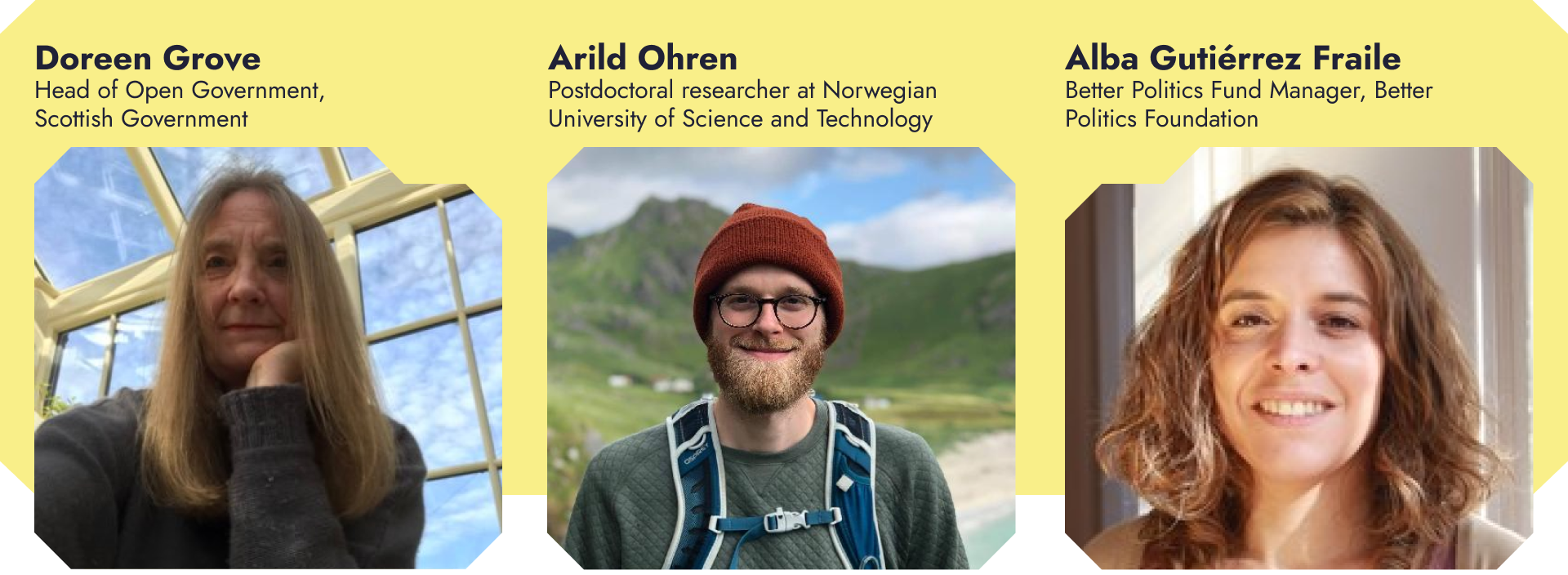
To explore how that could work in practice, the conversation then opens to three more voices. Doreen Grove, Head of Open Government at the Scottish Government, brings the view from inside government. She will reflect on what it takes to make participation a lasting part of how government works, and the role civil servants play in funding it. Arild Ohren, Postdoctoral Researcher at NTNU, has worked closely with citizen panels in Norway and across Europe. He will speak to what these panels need to be taken seriously by institutions. Alba Gutiérrez Fraile, Better Politics Fund Manager at the Better Politics Foundation, brings the funder's view: what it takes to finance democratic innovation and help good ideas grow.