
Stable funding for civil society should not be optional
Every seven years, the EU agrees on a long term budget that decides how much money goes where: agriculture, defense, and yes, democracy. That budget is called the Multiannual Financial Framework, or MFF. The next one, covering 2028 to 2034, is being negotiated right now, and it will shape what the EU can and cannot do to protect democracy for the next decade. Once it's agreed, it is very hard to revisit, so the choices made in the coming months will largely lock in what gets funded through 2034.
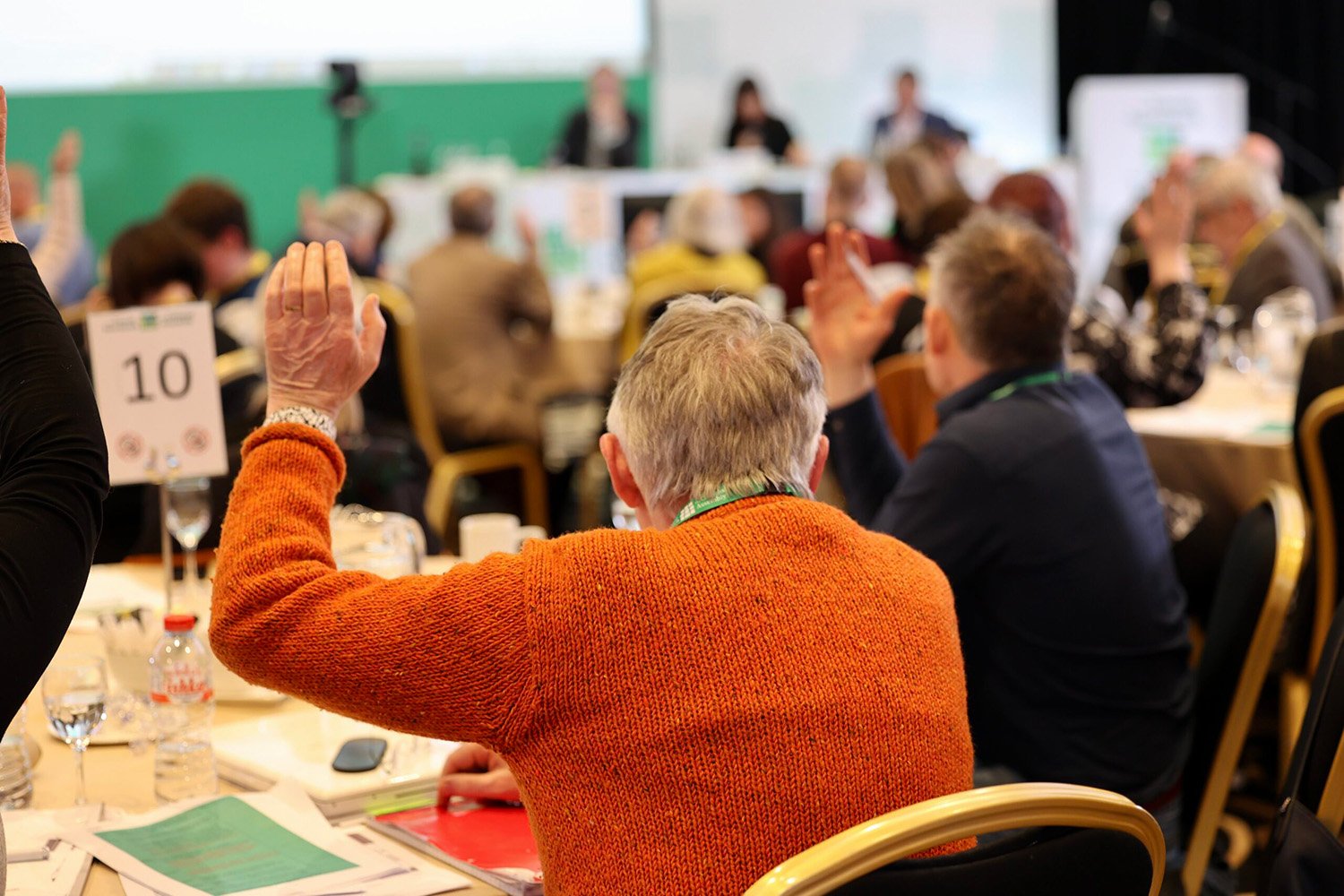
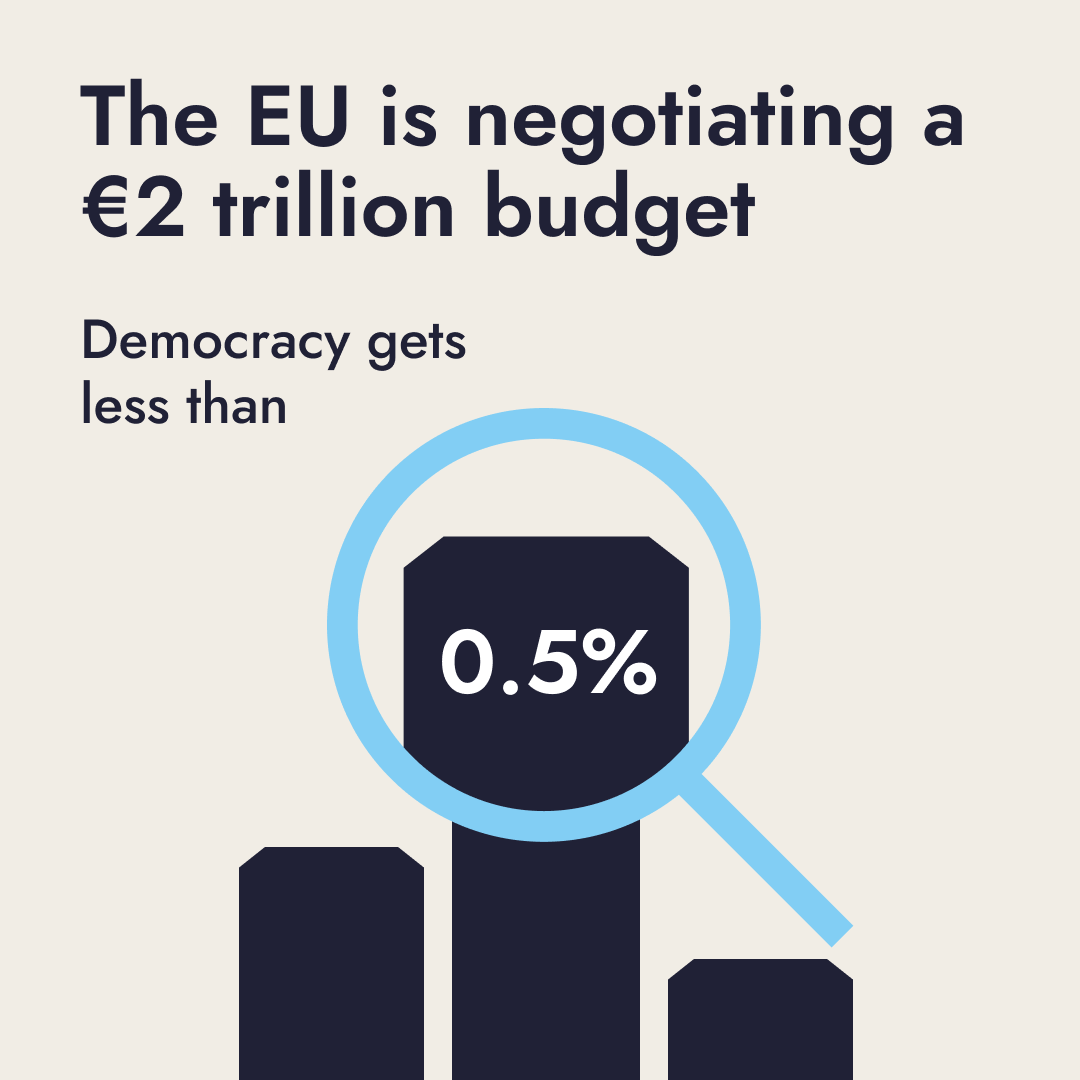
Right now, democracy funding sits almost entirely in one program called AgoraEU. It covers civil society, independent media, rule of law, and citizen participation across the whole EU, and it makes up less than half a percent of the total MFF. That is a modest number for a program meant to hold the line against disinformation, shrinking civic space, and rising authoritarianism, especially at a time when other major funders have been pulling back from Europe.
Join us on October 9 for a webinar on what the EU budget means for civil society and local governments. Register here.
Democratic resilience is not separate from the EU's other priorities like competitiveness or defense. It is what makes them possible: without functioning institutions, trusted information, and public buy in, none of the EU's other goals get delivered. That is why we teamed up with Alliance4Europe to publish a position paper laying out nine recommendations for the next EU budget:
1. Mainstream democracy funding. Right now, democracy money lives almost entirely in AgoraEU. If it also runs through the European Competitiveness Fund and the National and Regional Partnership Plans (the funds that flow to member states for things like cohesion and industrial policy), a single cut or trade off in one program cannot wipe out the EU's whole democracy effort.
2. Protect AgoraEU's budget. The European Commission proposed €8.7 billion for AgoraEU; the European Parliament wants it raised to €10.72 billion. We agree with Parliament. The Council of the EU (representing member state governments) has so far avoided putting any figure on the table at all. Anything below the Commission's proposal would cut civil society and independent media funding at exactly the wrong time.
3. Ensure coherence across the MFF. Different parts of the budget shouldn't work against each other. For example, funding migration policy in ways that ignore democracy and human rights standards undermines the EU's credibility elsewhere. Contradictions like this weaken the EU's capacity to act as a coherent whole.
4. Reject the juste retour principle. This is the idea, popular with some national governments, that a country's support for the EU budget should be judged mainly by how much money it gets back directly. That logic favors visible, nationally quantifiable programs like agriculture, and squeezes out harder to measure but essential public goods like democratic resilience.
The EU says democracy is a priority. The budget will prove it.
5. Earmark democracy in Global Europe. Global Europe is the EU's fund for supporting partner countries outside the bloc. Right now it has no funding specifically set aside, or "earmarked," for democracy, so democracy support has to compete against every other development goal for whatever is left.
6. Improve access for civil society. Smaller organizations often lack the staff to navigate EU grant applications and reporting requirements. Streamlining grants, simplifying reporting, and making the selection process more transparent would let them spend more time on their actual work.
7. Leverage rule of law fines and regulatory revenue. The EU already has tools to withhold funds from governments that undermine judicial independence or press freedom, but no clear process for redirecting that money. Combined with fines collected under the DSA and DMA (the EU's rules governing online platforms and Big Tech competition) and the AI Act, this is a real, currently unused source of additional democracy funding.
8. Support civic participation. Citizens' assemblies, participatory budgeting, and structured civic dialogue need dedicated funding built into MFF programs, not treated as a one off consultation exercise, but as real deliberation tied to actual decisions.
9. Open up the negotiations. MFF talks happen largely behind closed doors, often only in English, and split across separate silos for each program. Citizens can't hold anyone accountable for a process they can't follow.
Trilogue negotiations (the closed door talks where the Council and the European Parliament hash out a final compromise) are expected to start this fall, with the Council aiming to close the deal by the end of the year. That gives us a narrow but real window to shape the outcome.
To use it well, we need to widen the conversation. The MFF is one battle, but civil society across Europe is under pressure that goes beyond any single budget line, from online harassment to politically motivated funding cuts. And even where funding exists, it too often bypasses the cities and regions closest to citizens.
On October 9, we are continuing that conversation in a webinar. Building on the position paper's recommendations, we will make the case for treating citizen participation as permanent infrastructure, not a line item that depends on the next budget cycle.
Join the deliberative community
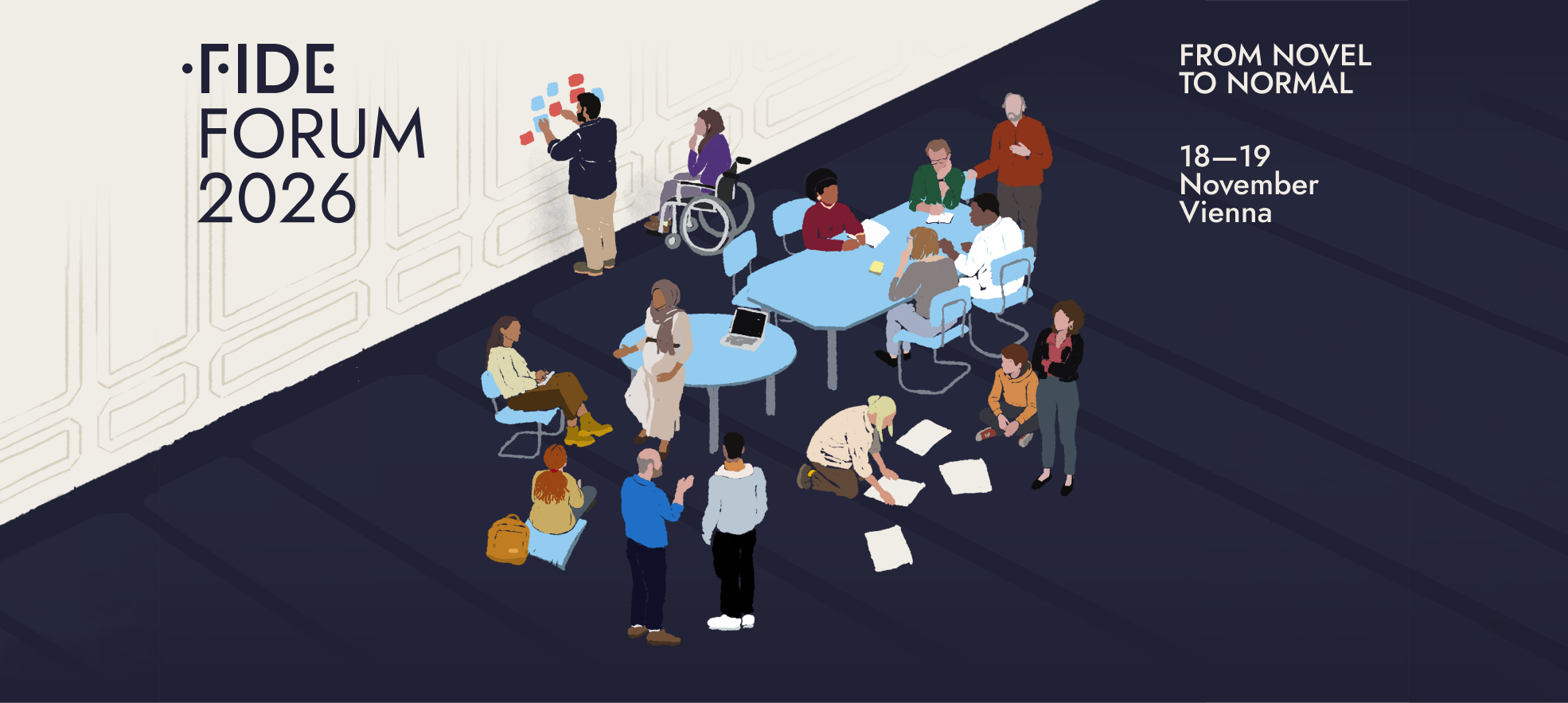
Two months until we meet in Vienna. The countdown is on, and the program is coming together with practitioners, public officials, political parties, NGOs, and funders from across the field. Workshop registration opens in September, so register early to secure your preferred sessions. We'll share the detailed program at the end of the month.
Details
Dates: 18 and 19 November 2026
Location: Kulturhaus Brotfabrik, Absberggasse 27, Vienna
Registration deadline: October 30**
**A limited number of spots are available, so early registration is encouraged.